Industry
Vacation Rentals
Project Type
Internal SaaS · Process Redesign
Claims Management System: Redesigning a Fragmented Operational Workflow
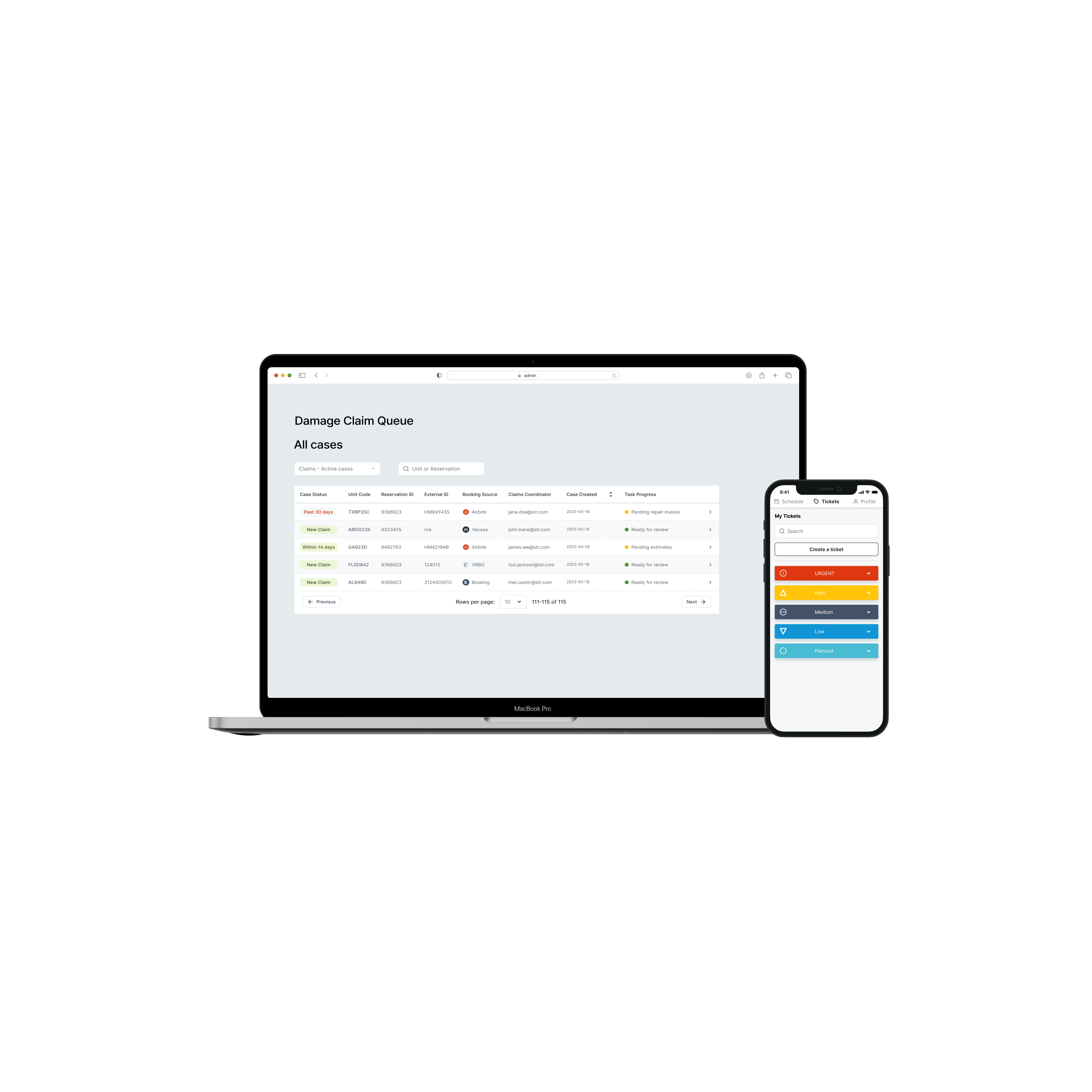
Redesigned a fragmented claims workflow across three stakeholder teams — reducing submission steps by 55%, with projected potential to accelerate resolution timeframes by 68% and improve third-party recoup rates by 38%.
ROLE
Product Designer
SCOPE
Process mapping · Service blueprint · User interviews · End-to-end design · Usability testing
STAKEHOLDERS
Guest Services, Homeowner Success, Local Operations, Administrative Claims
Business Objectives & Success Criteria
The Operational Cost of a Fragmented Claims Process
A nationwide property management operation was processing hundreds of daily damage claims across three stakeholder teams — with no centralized system to manage them. Housekeeping filed reports manually, local operations managers tracked cases across disconnected queues, and the administrative claims team relied on Excel sheets, SMS, and phone calls to coordinate resolutions.
The resulting challenge: tickets lost in handoff, resolution cycles stretching up to 90 days, and homeowners left without visibility into the status of their repairs. The opportunity was to redesign the end-to-end claims process — aligning three teams with competing workflows onto a single, structured platform that reduces errors, surfaces priority cases, and creates accountability at every stage.
Mapping a Fragmented Multi-Stakeholder Process
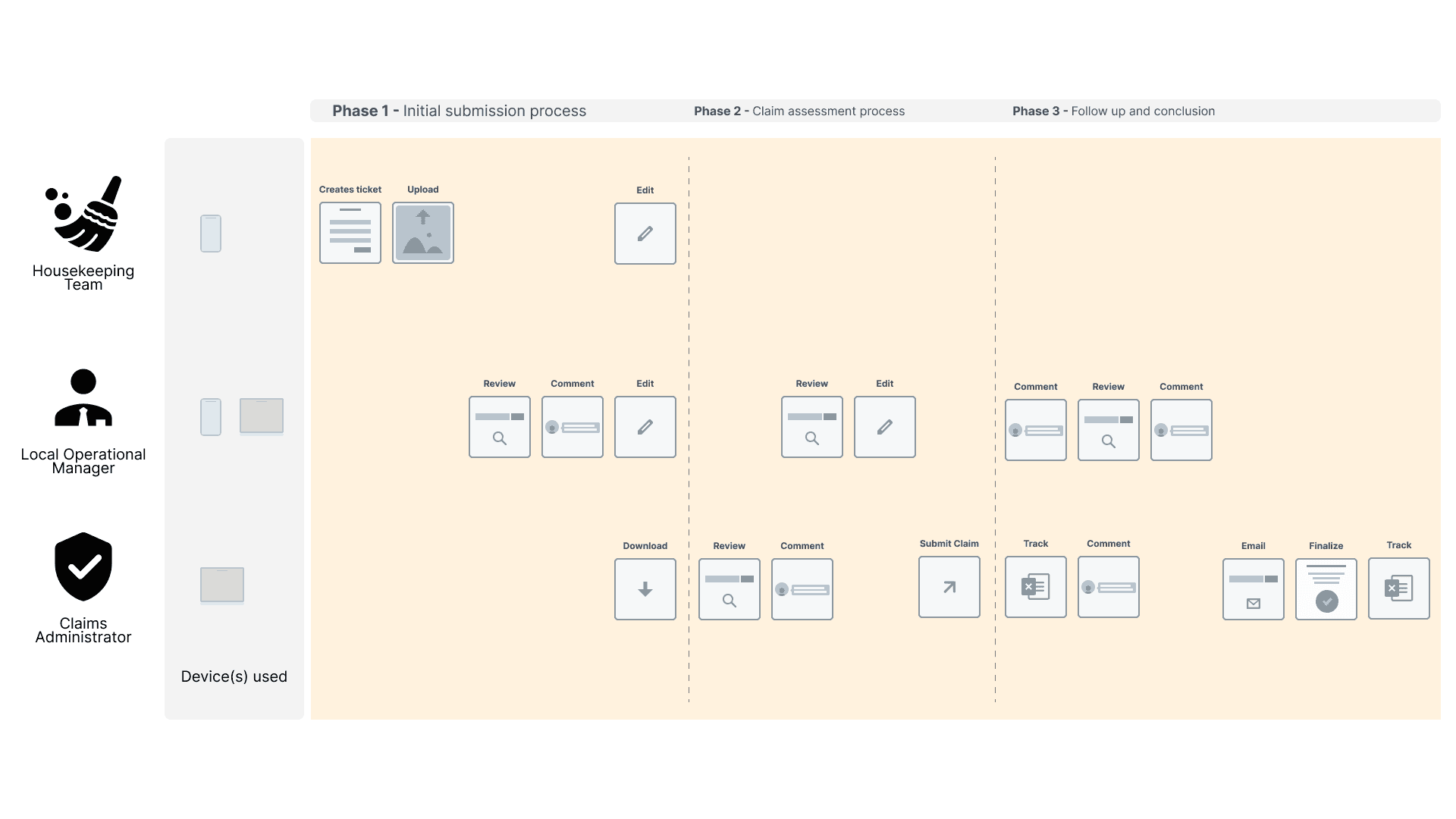
To understand the full scope of the problem, I mapped the end-to-end claims process across all three stakeholder groups — housekeeping, local operations managers, and the administrative claims team. Each team interacted with the same claim at different stages, yet had no shared system to coordinate handoffs or track progress.
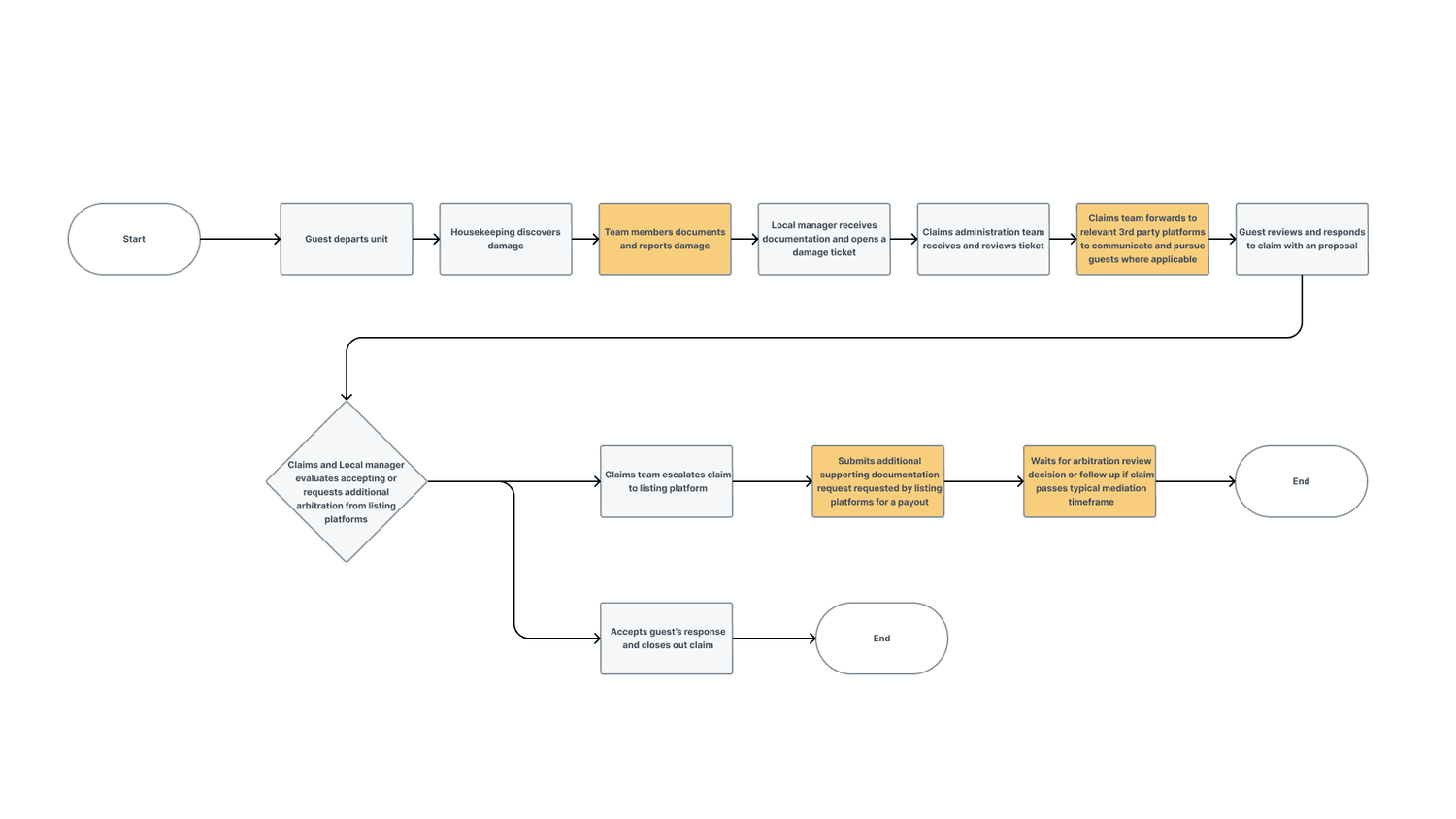
This was synthesized into a service blueprint that exposed where breakdowns were occurring: delayed ticket creation in the field, cases going untracked across reassignments, and no standardized communication channel between departments.
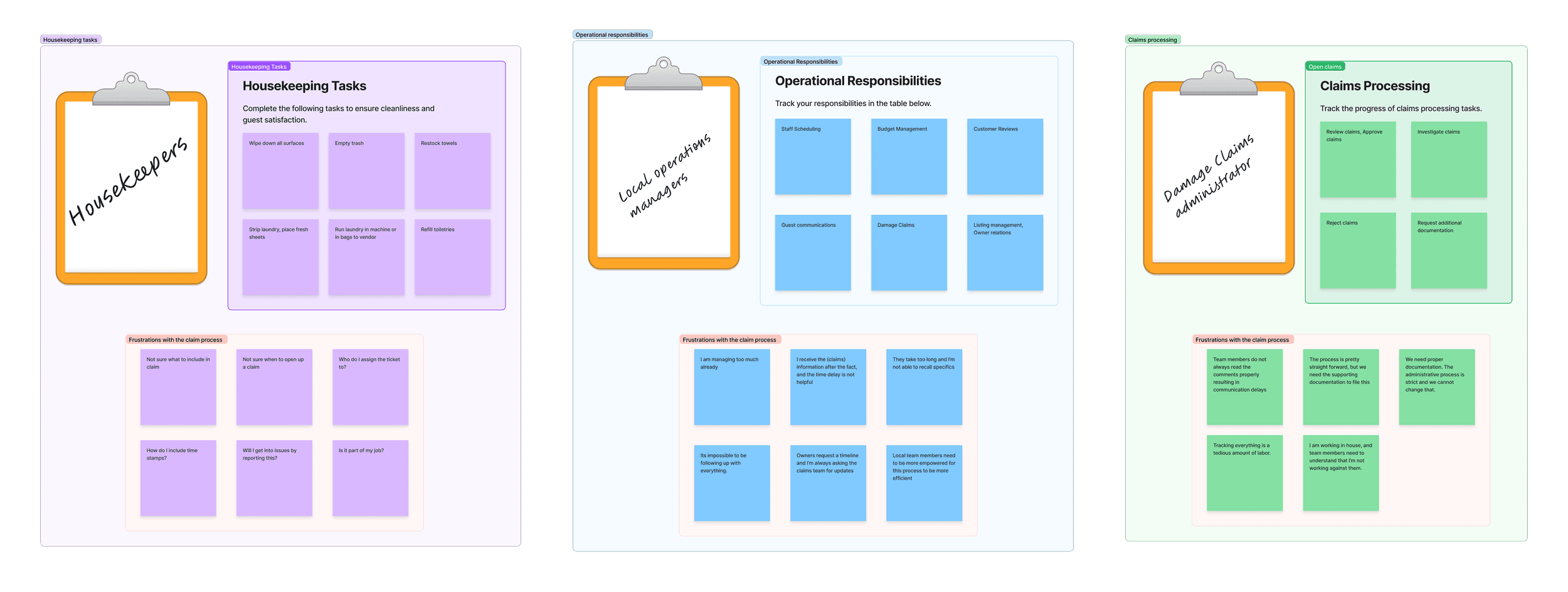
User interviews and data analysis confirmed three core failure points that would anchor the design direction.
Finding 1: Field submission delays were compounding downstream
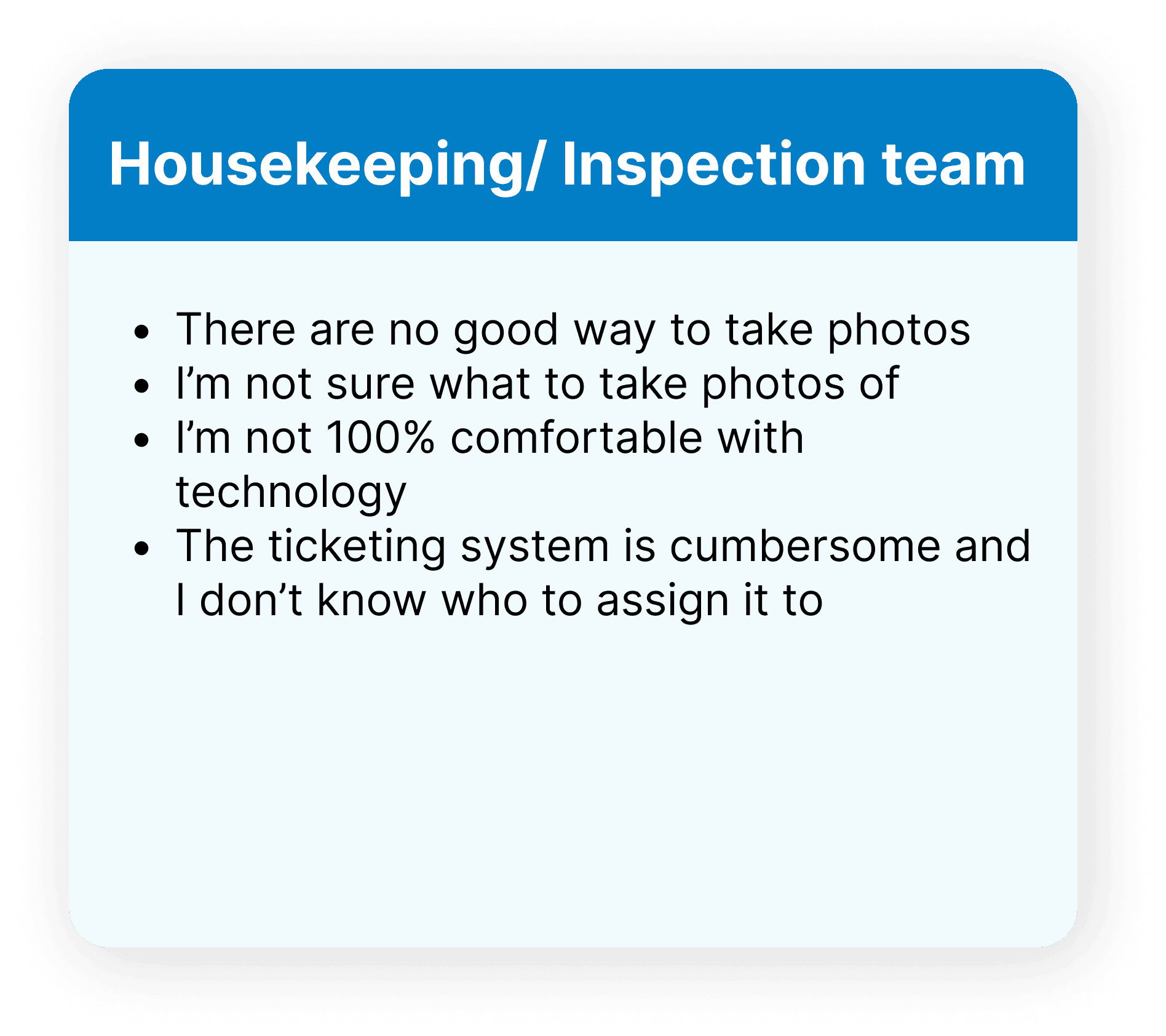
Housekeeping teams had no structured way to attach photos or descriptions at the point of damage discovery. The average time from damage found to ticket creation was five days — with an additional two days before guest contact was initiated. By that point, guests had often already submitted reviews, eliminating any opportunity for resolution before reputational damage occurred.
Finding 2: No visibility across reassignments created accountability gaps
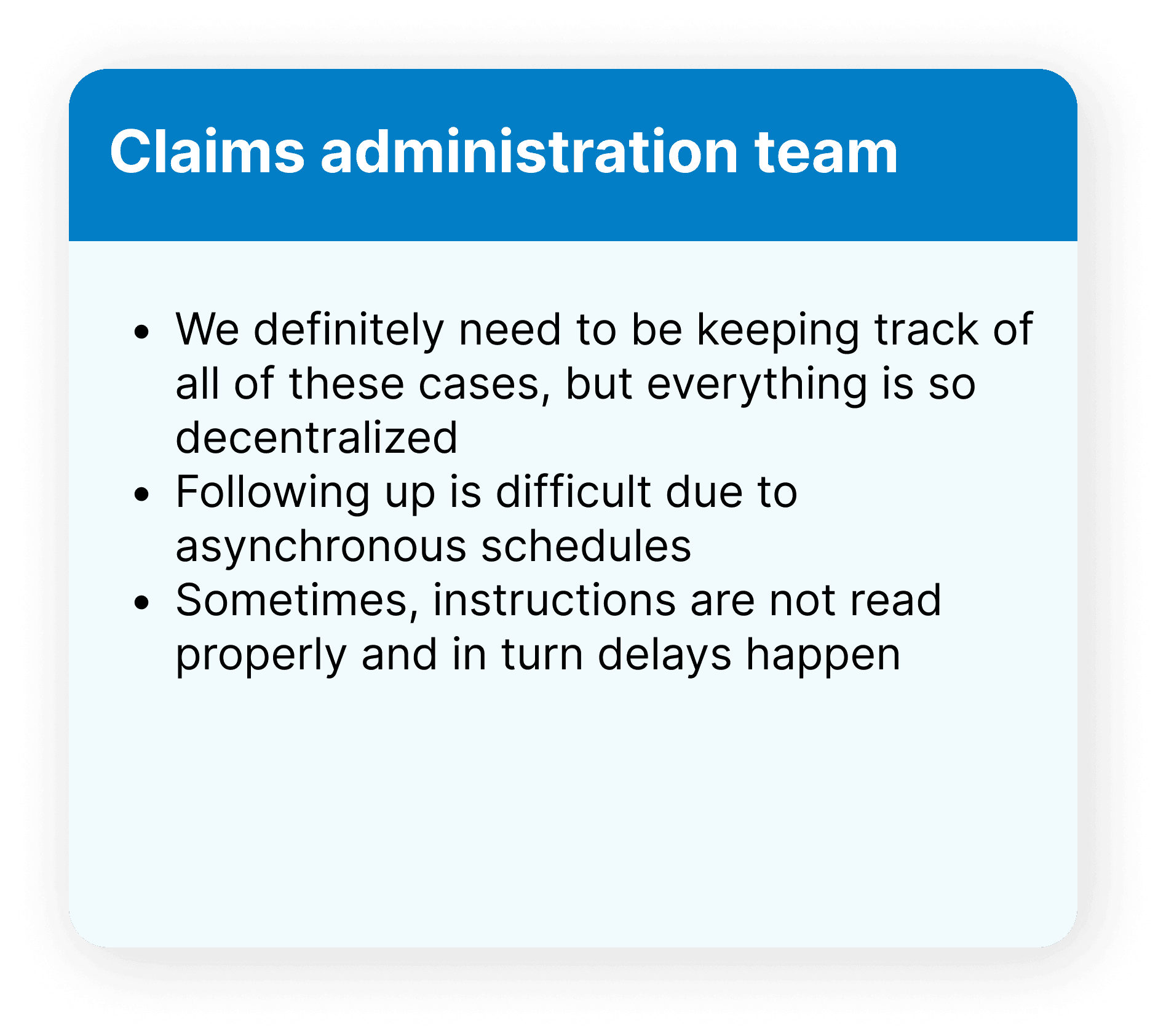
As tickets get reassigned and passed to different departments, the ticket creator does not have a good method to keep track of all that were opened. With seasonal influxes of caseload, wait times could be up to three months for a resolution resulting in escalated homeowners wondering when their repairs are going to be completed.
Transparency of the process
Comments and updates were frequently requested as to where the process stands. New managers and administrators have to refer to documentation and standard operating procedures for answers. This results in a cluttered ticket and frequent miscommunication and misalignment on time frames, expectations and unnecessary frustrations.
Streamlining Field-Level Claim Submission
Reducing Housekeeping Submission Friction at the Point of Discovery
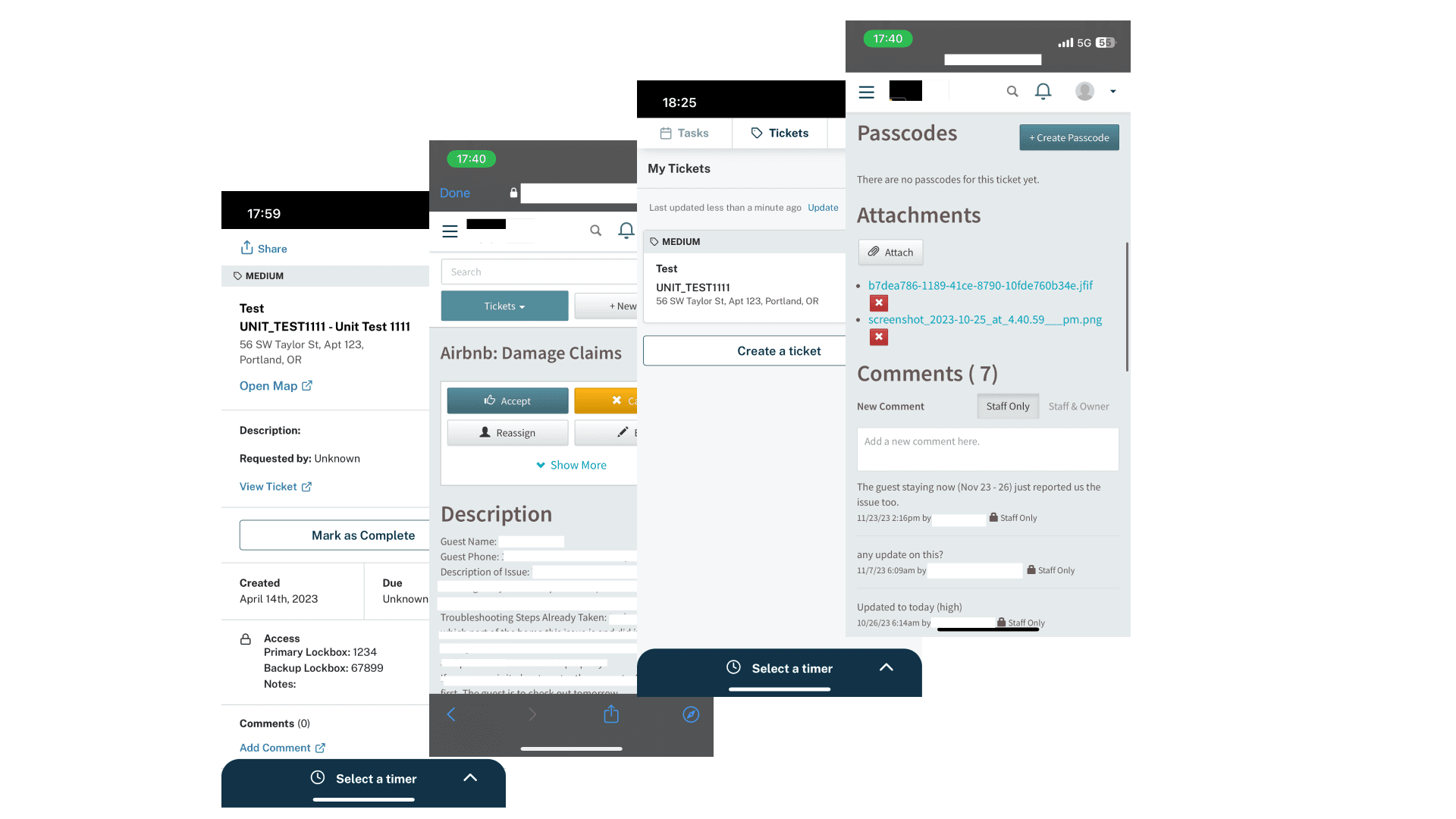
The existing submission flow placed the highest documentation burden on the team least equipped to handle it. Housekeeping staff — often first on the scene — had no structured way to attach photos, no templates for common damage types, and no guidance tailored to less experienced team members. The result was incomplete tickets at the point of origin, creating a chain of corrections and follow-ups that slowed every subsequent stage.
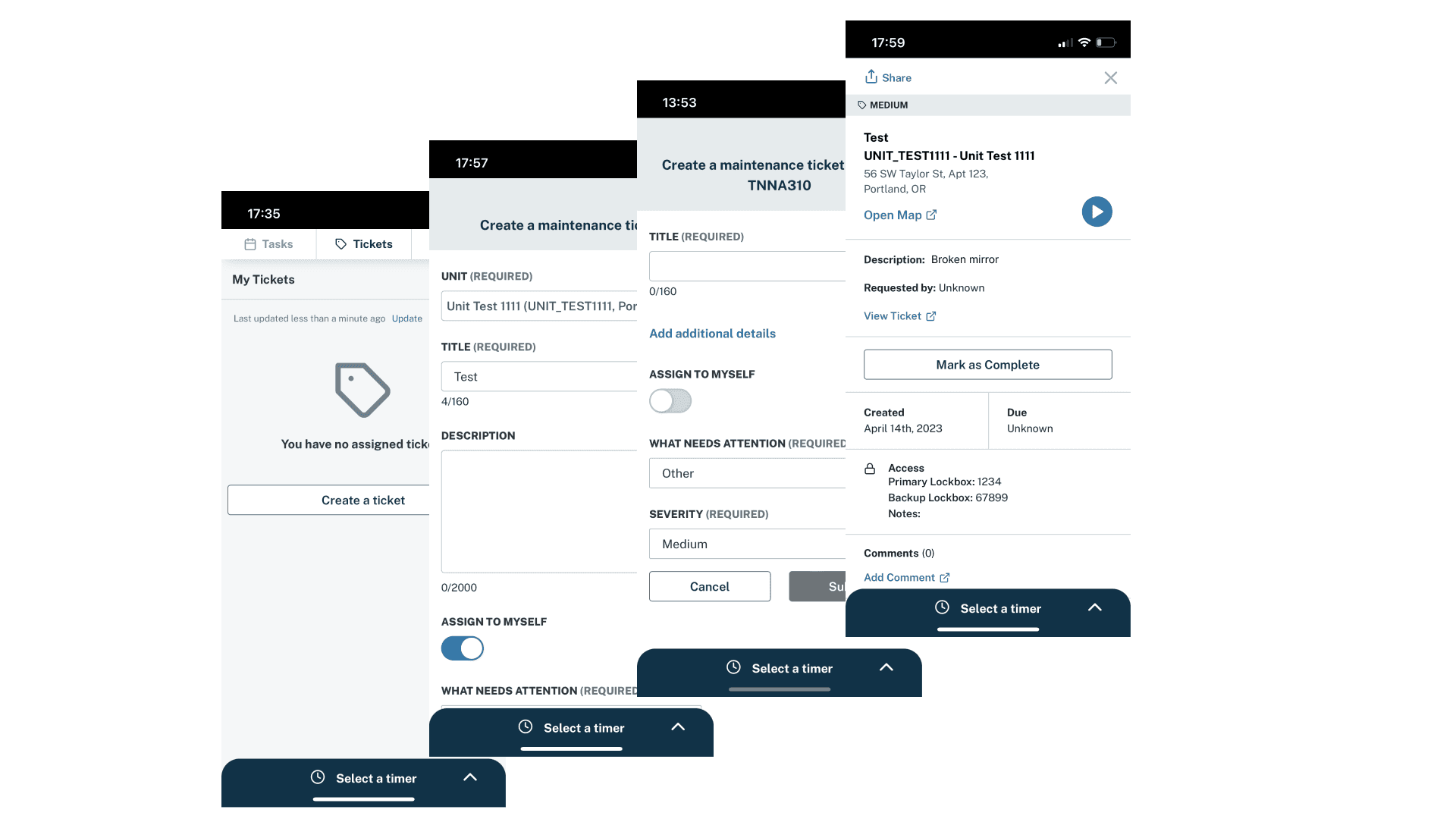
The redesign broke the submission process into focused, single-task steps and introduced damage-specific templates to standardize first-contact documentation. This reduced the total steps required to file a claim from 47 to 21 — a 55% reduction — while improving the completeness and accuracy of information captured before any cleanup began.
By front-loading the right structure at submission, downstream teams received better data from the start, reducing the need for back-and-forth and shortening overall resolution time.

Reducing Cognitive Load for Operations Managers
Restoring Clarity to a High-Volume Claims Queue
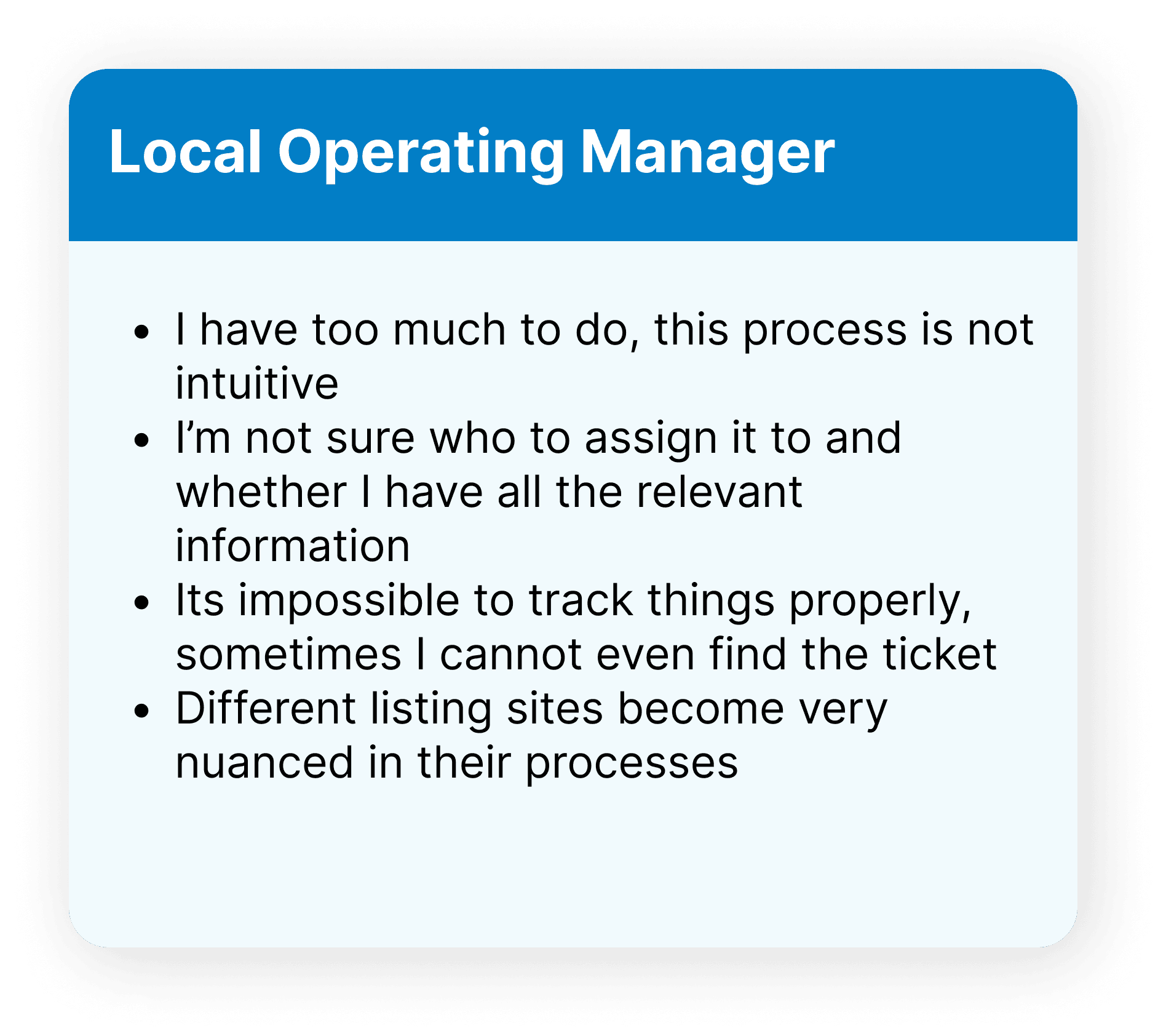
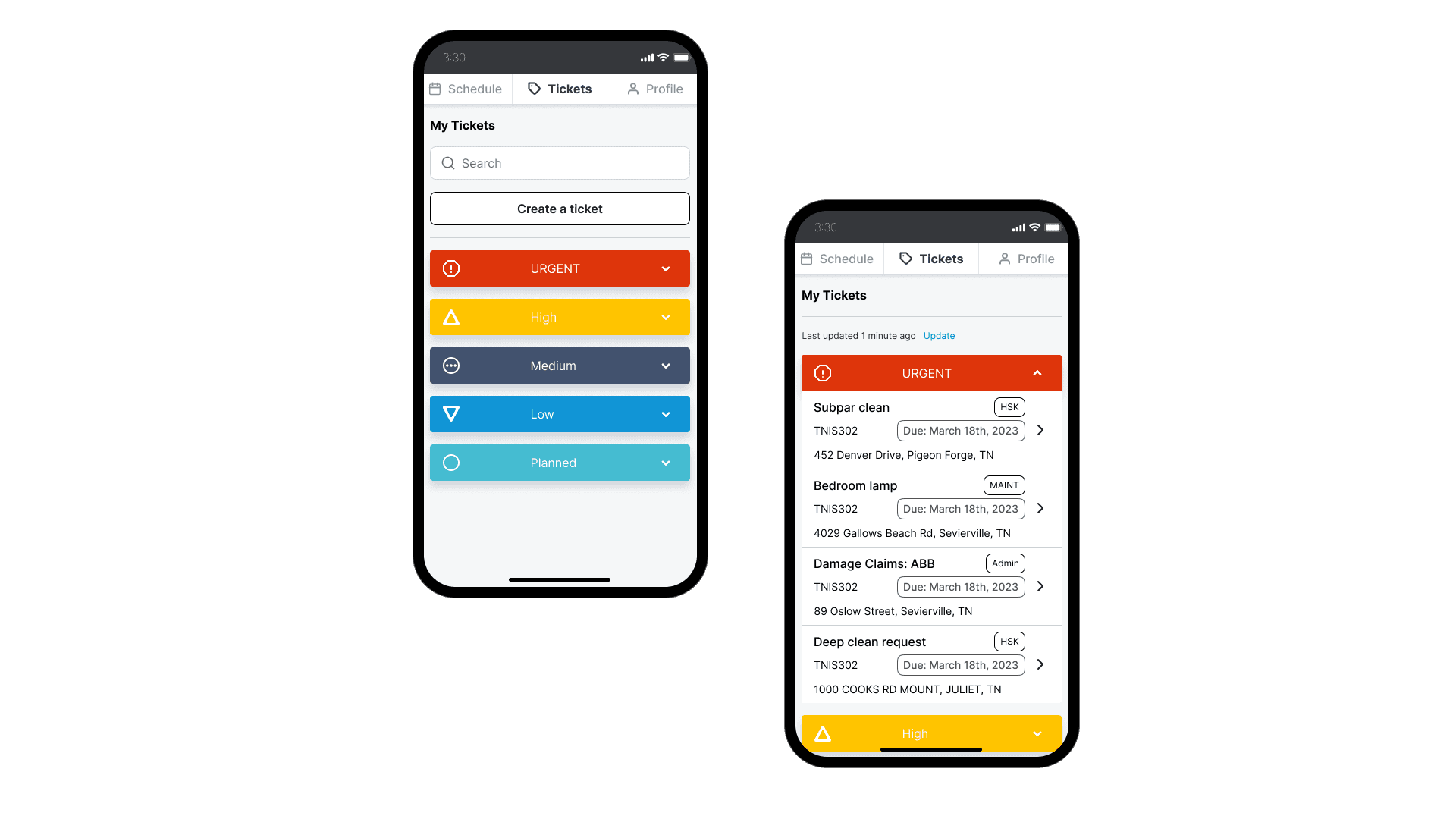
Local operations managers were responsible for overseeing an unpredictable, high-volume claims queue — yet the tool gave them no way to distinguish urgency, track due dates, or act quickly without navigating into each individual ticket. During seasonal peaks, this lack of hierarchy meant critical cases were treated the same as routine ones, increasing the risk of missed deadlines and escalated homeowners.
The redesign introduced a priority system using color coding, badges, and icons to establish clear visual hierarchy at a glance. Due dates and case status became immediately scannable, allowing managers to sort and triage their queue without opening individual records.
A claims-specific ticket template was introduced alongside a popup card drawer — enabling quick actions and surface-level review without leaving the queue view, with a link to the full detail when needed. The result was a tool that matched how managers actually work: quickly scanning for what needs attention, acting on the most urgent cases first.


Centralizing Claims Operations Into a Single Source of Truth
The administrative team sat at the most complex intersection of the claims process — responsible for coordinating resolutions across field reports, maintenance records, and guest communications, yet operating entirely across Google Sheets, disconnected maintenance tickets, and SMS threads. There was no single source of truth, no structured way to prioritize, and no audit trail to reference when disputes or miscommunications arose.
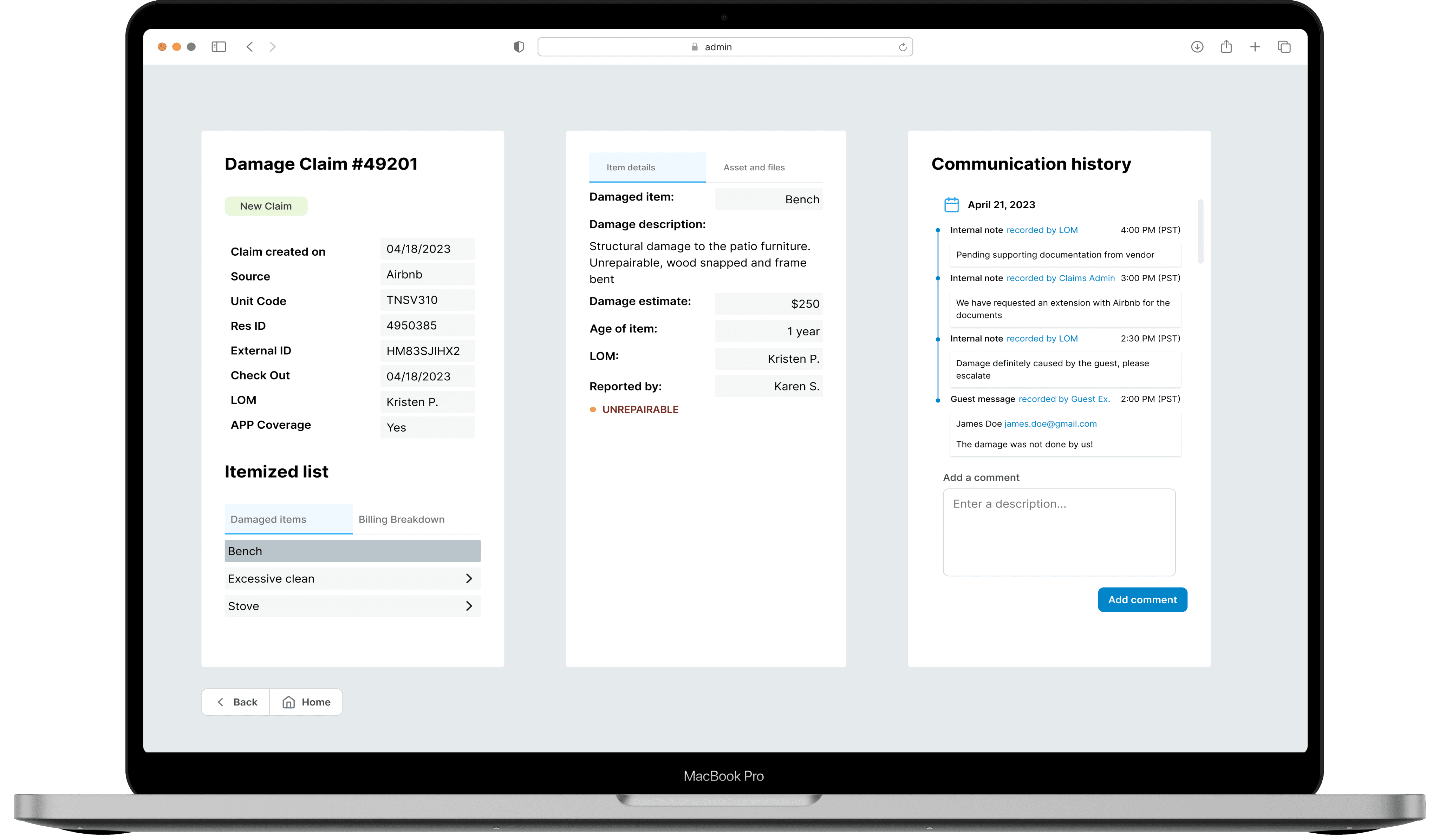
The redesign centralized all claims activity into a dedicated dashboard, auto-populating unit and reservation data to eliminate manual entry at the start of each case. Claims were itemized and organized into individual folders, making multi-component tickets reviewable without losing context across attachments or updates.
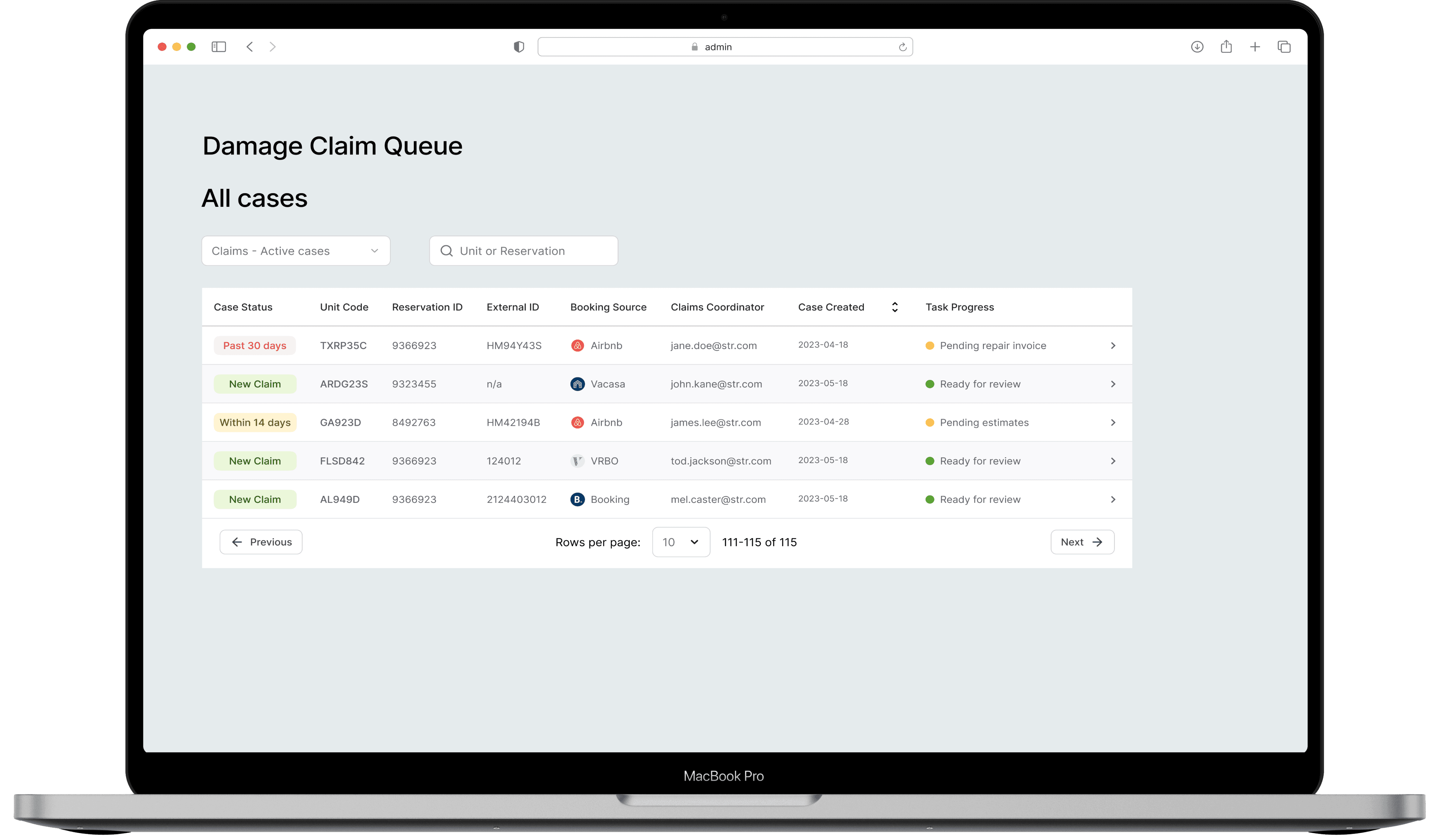
A priority-based queue was introduced to surface cases by urgency and guest checkout date — separating claims from the broader maintenance queue for the first time. Combined with a persistent communication history log, the dashboard gave the admin team a reliable audit trail and a shared reference point to resolve disputes, align on timelines, and close cases with confidence.